
Blog Post
A Wedding Venue Day-Of Timeline Template for Your Staff
A wedding venue day-of timeline your staff can run from, hour by hour from load-in to breakdown. Copy the template and adapt it to every event you host.
VenueBill Team
VenueBill is a booking and billing platform for wedding and event venues.
A wedding venue day-of timeline is an hour-by-hour operations plan for your staff, running from load-in through ceremony, reception, and breakdown. The template below gives your team a repeatable structure you can adapt to any event so nothing gets missed and no one has to guess what happens next.
A wedding runs on two timelines. The couple's timeline is the emotional one: the first look, the toasts, the last dance. Your wedding venue day-of timeline is the operational one: when the doors unlock, when the caterer loads in, when your bar closes, when the last chair gets stacked. Couples and planners obsess over the first. Smart venues obsess over the second, because a tight operations timeline is what keeps the couple's day feeling smooth. This template is built for your staff, not the couple, and it is meant to be copied and reused for every booking.
Why your venue needs its own timeline
The couple or their planner will hand you a timeline focused on their moments. It rarely covers what your team needs: vendor load-in windows, staff arrival, turnover buffers, and breakdown order. When your venue does not have its own operations timeline, your event lead spends the day reacting instead of running the show. A written wedding venue day-of timeline means every staffer knows their cue, your event lead is not the single bottleneck, and the whole day flows without frantic radio calls.
The wedding venue day-of timeline template
Here is a full-day template for a typical evening wedding with a 5:00 pm ceremony. Shift the hours to match each event, but keep the structure. Times below are relative to the ceremony start.
- 7 hours before (10:00 am) - Venue open and prep. Event lead unlocks, confirms HVAC and lighting, walks the space, and checks that the room is clean from any prior turnover.
- 6 hours before (11:00 am) - Staff arrival and briefing. Full team arrives. Event lead briefs everyone on this specific couple: names, must-not-miss moments, accessibility needs, and any special requests.
- 5 hours before (12:00 pm) - Vendor load-in. Caterer, florist, DJ, and rentals arrive. Confirm each vendor's certificate of insurance is on file before they access the space. Direct each to their zone.
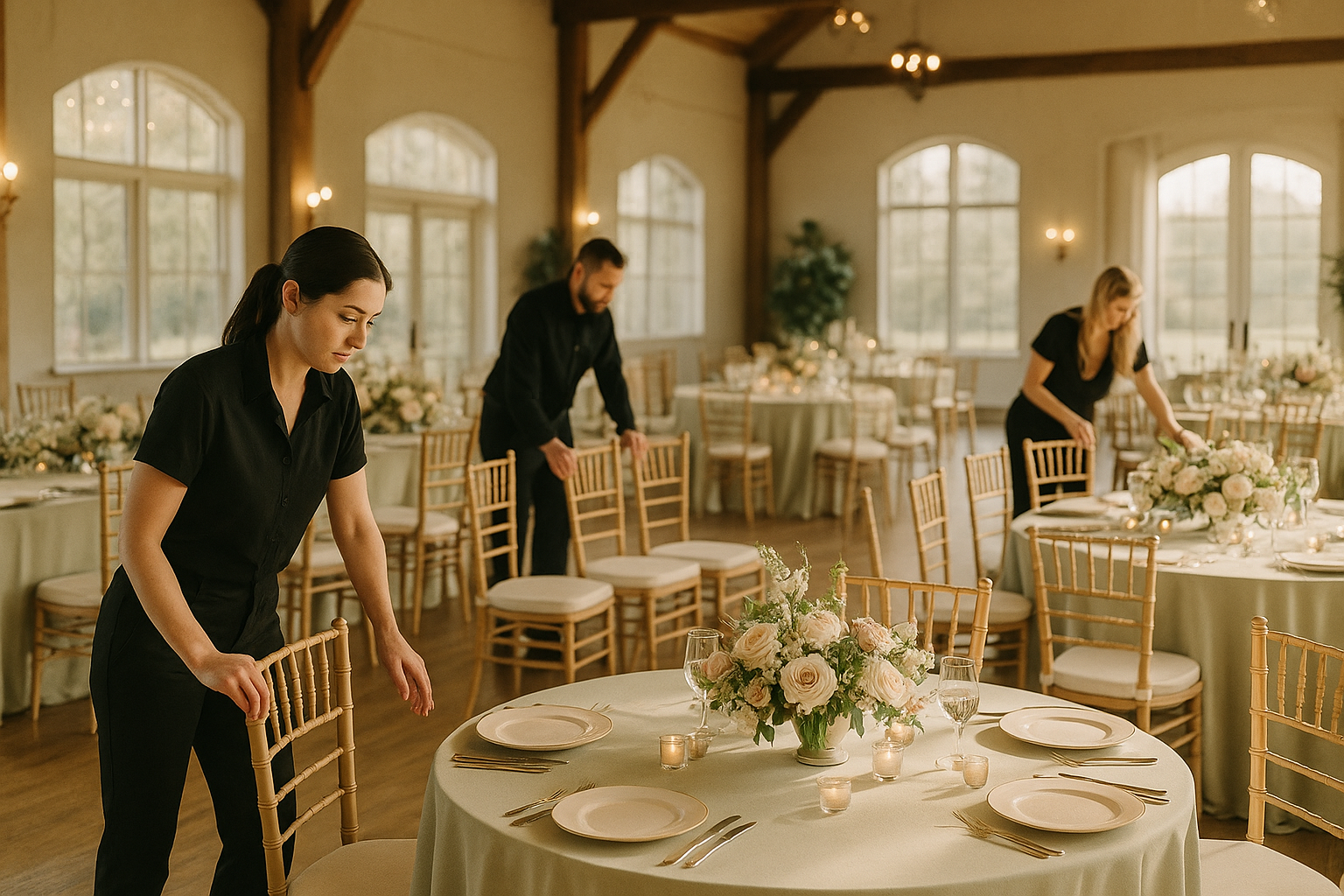
- 3 hours before (2:00 pm) - Room setup complete. Tables, chairs, linens, place settings, and ceremony seating fully staged. Do a walkthrough against the floor plan.
- 2 hours before (3:00 pm) - Final checks. Restrooms stocked, bar set, sound tested, signage placed, and the couple's personal items positioned.
- 1 hour before (4:00 pm) - Doors and guest arrival. Ushers and staff in position. Bar and water stations open for early guests.
- Ceremony (5:00 pm) - Ceremony service. Staff quiet and out of sightlines. Setup crew begins flipping the reception space if it is the same room.
- Cocktail hour (5:30 pm) - Transition. Guests to cocktail area, room flip completed, dinner service staged.
- Reception (6:30 pm) - Dinner and dancing. Service staff work their assigned sections. Bar staff manage the tab and the bar minimum. Event lead tracks the timeline.
- Last call (10:30 pm) - Wind down. Bar closes per your policy. Staff begin discreet pre-breakdown of non-essential areas.
- End time (11:00 pm) - Guest departure. Enforce your contracted end time. Hand the couple their personal items and any gifts.
- Breakdown (11:00 pm to 12:30 am) - Reset. Full breakdown, vendor load-out, trash, and a reset walkthrough so the space is ready for the next event or a clean close.
Print this, adapt the clock to each booking, and hand it to your event lead. That single page removes most of the day-of guesswork.
Tie the timeline to the specific booking
A generic template gets you 80 percent of the way. The last 20 percent is the couple's specific details: their vendor list, their special requests, their guest count, and any accessibility needs. Your team should brief from those details, not from memory. Because VenueBill keeps each booking's contract, guest count, timeline, and notes on one record, your event lead can build the day's timeline straight from what the couple agreed to, instead of stitching it together from scattered emails. The same event-date backbone that drives your payment schedule can anchor your operations plan.
Build in turnover for back-to-back events
If your venue hosts more than one event in a day, the breakdown-to-setup window is the most fragile part of the whole timeline. A slow turnover from an afternoon event bleeds straight into the evening couple's setup and puts you behind before you start. Your day-of timeline should always include a hard turnover buffer, and it should hand off cleanly to a dedicated turnaround checklist between events. For venues juggling several events, our guide on managing multiple events in one day goes deeper on scheduling the collisions out.
Debrief and improve the template
The template is a living document. After each event, spend a few minutes with your team noting where the timeline held and where it slipped. If the room flip always runs 15 minutes long, build that time in. If load-in consistently starts late, move the window. A wedding venue day-of timeline that gets refined event after event becomes one of your most valuable operational assets, and it makes training new staff far faster because the plan is already written down. Pair it with solid staff training and your day-of runs itself.
A quick timeline checklist
- Build your own operations timeline, separate from the couple's.
- Cover load-in, setup, service, end time, and breakdown.
- Brief staff on the specific couple, not just the tasks.
- Always include a hard turnover buffer for back-to-back events.
- Adapt the clock per booking but keep the structure.
- Debrief after each event and refine the template.
A clear day-of timeline is what makes a complicated day look easy. If you want each booking's timeline, guest count, and notes in one place so your staff can run from a single source, you can start a free 14-day trial of VenueBill with a card required to start, and see how it fits on our pricing page. It is built specifically for event venues.
Frequently Asked Questions
Quick answers to the questions readers ask most about this topic.
What should a wedding venue day-of timeline include?
How is a venue timeline different from the couple timeline?
How do I adapt the timeline for back-to-back events?
Ready to improve your invoicing?
VenueBill makes it easy to invoice faster, get paid on time, and manage your cash flow. Start free today.
Sign Up FreeMore from the blog
Wedding Venue Payment Plan Template Built From the Event Date
A wedding venue payment plan template that counts milestones backward from the wedding day, not the booking day, so it works no matter when a couple books.
Wedding Venue Rental Agreement Template and How to Customize It
A wedding venue rental agreement template broken down section by section, with notes on which clauses to customize per event so every booking stays protected.
Wedding Venue Payment Reminder Templates That Get Replies
Copy-and-paste wedding venue payment reminder templates for every milestone, warm early and firmer near the deadline, so couples pay without the awkward chase.
Compare VenueBill for venue operations
See how VenueBill fits alongside the tools wedding and event venues consider for bookings and billing.