
Blog Post
Training Event Staff to Represent Your Wedding Venue Well
Learn how to train wedding venue staff so every event runs smoothly. Onboarding steps, service standards, and day-of habits that protect your reviews.
VenueBill Team
VenueBill is a booking and billing platform for wedding and event venues.
To train wedding venue staff well, give every hire a written service standard, walk them through a full event before they work one solo, assign clear day-of roles, and debrief after each wedding so mistakes turn into fixes instead of bad reviews.
Your building, your food, and your pricing all matter, but on the actual day it is your people the couple remembers. A bartender who is warm and quick, a setup lead who anticipates the rain plan, a server who notices grandma needs a chair before she asks. That is what earns the five-star review and the referral to the couple's friends. When you train wedding venue staff to a real standard instead of hoping they figure it out, you protect the single most fragile part of your reputation: the eight hours everything has to go right.
Start with a written service standard
Most venues train by osmosis. A new server shadows an old one, picks up habits good and bad, and nobody ever writes down what "good" looks like. That is how service quality drifts. Put it on paper instead. Your standard does not need to be a binder, just a one or two page document that answers the questions a new hire actually has.
- What do we wear? Be specific. All black, closed-toe shoes, no visible phone.
- How do we greet guests? A simple script beats an awkward improvised hello.
- Who do we go to with a problem? Name the day-of lead so a server never freezes.
- What is never okay? Sitting down in view of guests, being on a phone, arguing with a vendor in front of the couple.
Hand this to every hire on day one. When you train wedding venue staff from a shared document, you stop relying on each employee's memory of how the last person did it.
Onboard before the pressure of a live event
Nobody should work their first wedding cold. Run a paid onboarding shift where a new hire walks the full arc of an event with no guests present: where linens live, how the bar is stocked, the setup for a 150-guest seated dinner, the breakdown order, where the breakers are. A single two-hour walkthrough removes half the day-of panic.
Then have them shadow one real event before they run a station alone. On that shadow shift, give them one narrow job (bussing, or refilling water) so they learn the rhythm without owning an outcome. A venue that hosts 40 weddings a year at an average of $8,000 cannot afford a $320,000 season of bookings to hinge on someone's untrained first Saturday.
Assign clear roles for the day
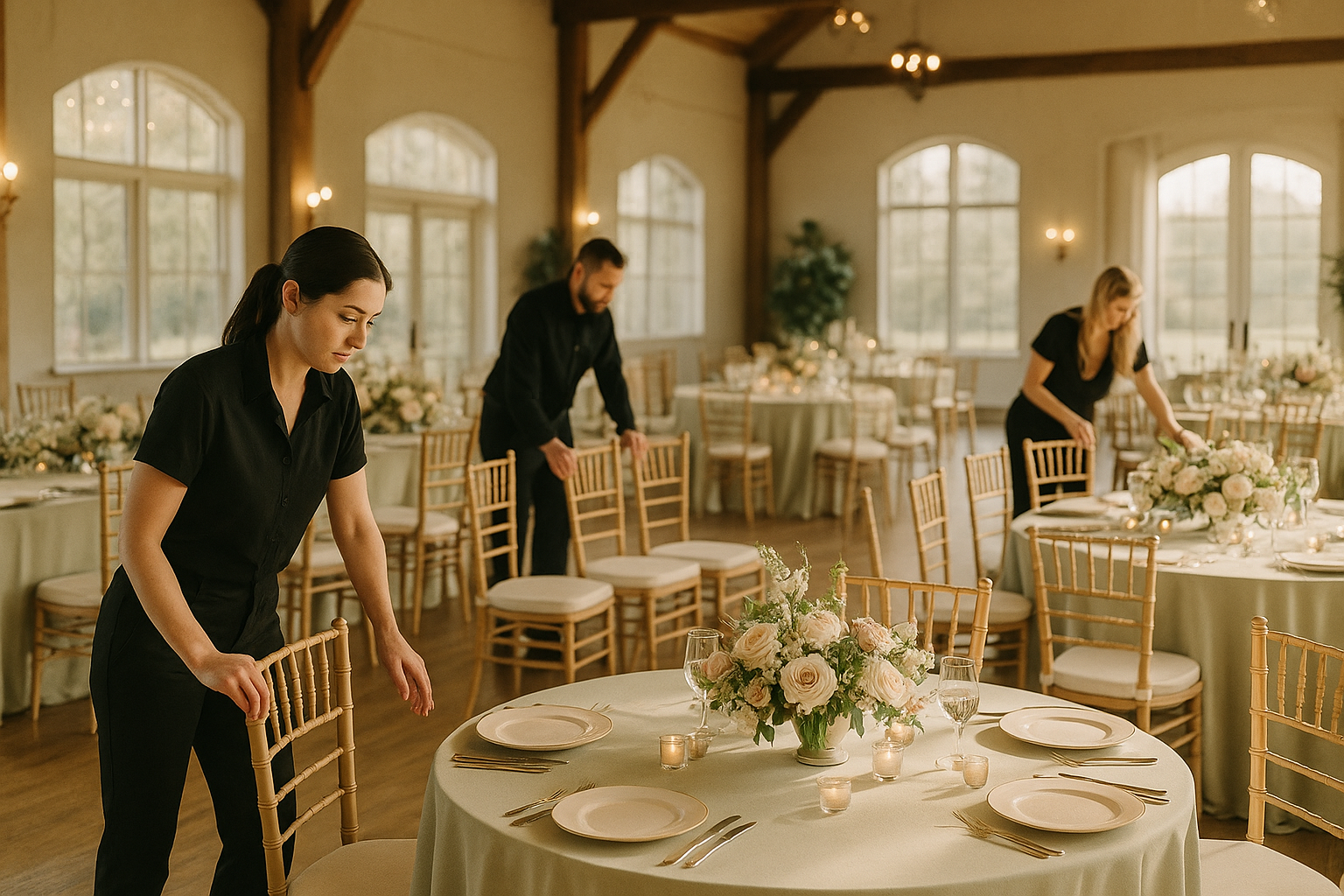
The fastest way to a chaotic reception is five people who all think someone else is handling the cake table. Before doors open, every person should know their zone and their captain. A clean structure for a mid-size wedding might be:
- Event lead: owns the timeline, is the couple's single point of contact, and makes the call on any judgment question.
- Setup and breakdown crew: tables, chairs, linens, and the turnover reset.
- Service staff: food, water, and clearing, each assigned a section of the room.
- Bar staff: owns the bar minimum, the tab, and last call.
When roles are assigned in advance, your event lead is not answering ten "where does this go" questions during cocktail hour. Your team knows what your venue offers and how the day should flow, which is exactly what couples paid for when they signed. If you host back-to-back events, pair this with a tight turnaround checklist between events so the reset never eats into the next couple's setup window.
Teach the couple experience, not just the tasks
A well-trained server can carry three plates. A great one knows the couple's names, knows the father of the bride uses a cane, and knows to never let the head table sit with empty glasses. Spend part of every pre-event briefing on the specific couple: their names, their must-not-miss moments, any accessibility needs, and the two or three things they said mattered most on their tour.
This is where your booking system earns its place. Because VenueBill keeps the contract, the payment schedule, and the event notes together on one record, your event lead can pull up a booking and brief the team from the same details the couple gave months ago, instead of relying on a sticky note or a half-remembered email.
Debrief after every event
The best training happens in the 15 minutes after breakdown, while it is fresh. Ask three questions: What went well? What went sideways? What would we change next time? Write the answers down. A pattern of "the buffet line jammed at the corner" three weddings running is a floor-plan fix, not a staff failure. Debriefs turn one-off mistakes into permanent improvements, and they signal to your team that you care about getting better, not just getting through the night.
Protect the reviews your marketing depends on
Every trained habit points at the same payoff: the review a couple leaves the week after. Great staff performance is what makes a couple write the paragraph that books the next three couples. It is far cheaper to train your team to a standard than to try to win back a couple's goodwill after a rough night. Consistent, well-trained service is the quiet engine behind word of mouth.
A quick training checklist
- Write a one to two page service standard and hand it to every hire.
- Run a paid, guest-free onboarding walkthrough of a full event.
- Have new staff shadow one real wedding before working solo.
- Assign zones and a day-of captain before every event.
- Brief the team on the specific couple, not just the tasks.
- Debrief for 15 minutes after breakdown and log what to change.
Training is not a one-time event, it is a habit you build wedding by wedding. If you want your booking details, timelines, and event notes in one place so your team can brief from the same source of truth, you can start a free 14-day trial of VenueBill with a card required to start, and see how the operations side fits your venue on our pricing page. Learn more about how it all works for event venues.
Frequently Asked Questions
Quick answers to the questions readers ask most about this topic.
How long does it take to train new wedding venue staff?
What should a wedding venue service standard include?
How do I keep event staff consistent across many weddings?
Ready to improve your invoicing?
VenueBill makes it easy to invoice faster, get paid on time, and manage your cash flow. Start free today.
Sign Up FreeMore from the blog
Event Coordinator at a Wedding Venue: A How-To Guide
What a wedding venue event coordinator actually does day to day, a vendor and timeline checklist, and where the role earns median pay of $61,160.
Staffing a Wedding Venue: How Many People per Event?
A guide to wedding venue staffing: staff-to-guest ratios for setup, service, and breakdown by event size, so every wedding runs smoothly and profitably.
How to Set a Wedding Venue Payment Schedule from the Event Date
Build a wedding venue payment schedule keyed to the event date: deposit at signing, midpoint payment, and final balance before the wedding, with examples.
Compare VenueBill for venue operations
See how VenueBill fits alongside the tools wedding and event venues consider for bookings and billing.